Four Treasures of the Study
How to read a Chinese seal
Red characters or white? Which square do you start from? And what kind of seal is it: a name, a studio, a phrase, a collector's mark? A practical guide to the red stamps on Chinese calligraphy and painting.
First: red characters or white?
Every seal impression is one of two kinds, decided by which parts of the stone face stand up and take the seal paste:
- Relief, zhuwen (朱文), also called yangwen. The carver cuts away the ground around the (reversed) characters, leaving the strokes and the border standing. The stamp shows red characters on the paper. There is usually more stone to remove, and the cut ground has to be even.
- Intaglio, baiwen (白文), also called yinwen. The knife cuts into the strokes themselves. The cut-away strokes take no paste, so the stamp shows white characters on a red ground.
The two carry different visual weight on a page: a white-character seal reads as a block of red, a red-character seal as red lines. And they are not always pure. Some historical seals mix the two on one face (see the third example below).
The characters on the stone are cut in mirror image, so that they read the right way round on the paper.
Where to start reading
Chinese was traditionally written in vertical columns, right to left, and seals usually follow that. Start at the upper right, read down the right column, then move to the column on its left.
A three-character seal often balances two simpler characters stacked in one column against a single, more complex character that takes the full height of the other. That is a compositional choice, seen in Song and Yuan private seals among others.
But “usually” is doing real work. Four seals in the Palace Museum collection show the range:
| Seal text | Carver | Type | Reading order |
|---|---|---|---|
| 松下清斋摘露葵 | Zhu Wenzhen 朱文震 | relief (red characters) | from the upper right, in order (7 characters) |
| 无咎周甲后作 | Wang Ti 王褆 | intaglio (white characters) | from the upper right, in order (6 characters) |
| 陈介褀印 | Weng Danian 翁大年 | mixed relief and intaglio | from the upper right, counter-clockwise, in a circular arrangement |
| 十钟山房藏钟 | Wang Shijing 王石经 | intaglio, in yuzhu (jade-chopstick) seal script | from the upper right, in order |
The lesson of the third one: a seal face is not always purely relief or intaglio, and the reading order is not always two columns read in sequence. If the straightforward reading makes no sense, try going round the face the other way.
What kind of seal is it?
- Name seal (姓名章): the artist’s name. It authenticates the signature, so it sits close to the inscription.
- Style-name seal (字号章) and studio seal (斋馆章): the courtesy or art name, or the name of the writer’s studio. They carry a personal, cultural identity rather than a legal one.
- Leisure seal (闲章): a phrase, a line of verse, a motto. Content is free.
- Leading or introductory seal (引首章): placed near the beginning of a work, to balance the composition and express the writer’s taste.
- Collector’s seal (鉴藏章): stamped later by an owner, not by the artist.
The name, style-name and studio seals are the ones that “answer” the signature: their position echoes where the inscription is.
The script
Seals are normally carved in seal script (篆书), not the regular script of the main text. Four families come up again and again: small seal script (小篆), mouzhuan (缪篆, the squared script fitted to Han seals), Han seal script (汉印文字) and Yuan red-character (元朱文, fine, rounded relief lines). Carvers do not simply shrink characters into a square: the density of each character, where red is left and where white, all have to answer one another. The phrase for it is 分朱布白, “dividing the red and arranging the white”.
One more place to look: the side of the stone
A literati seal often has an edge inscription (边款) cut into the side of the stone after the face is finished. A short one may be just the carver’s name; a long one can record who the seal was made for, the date and season, why it was cut, or the carver’s views on seal-carving. It never appears in the stamp on the painting. You see it on the stone, or in a rubbing.
Questions
What is the difference between zhuwen and baiwen?
Zhuwen (relief) prints red characters on white; baiwen (intaglio) prints white characters on a red ground.
Which way do you read a Chinese seal?
Usually from the upper right, down the right column, then the left column. Some historical seals read clockwise or counter-clockwise around the face instead.
What is a leisure seal (闲章)?
A seal carrying a phrase, line of verse or motto rather than a name. Its content is free and it is often used to balance the composition.
- Relief and intaglio, seal types, composition: the Four Treasures of the Study app’s artefact catalogue, which cites China Intangible Cultural Heritage (篆刻) and the Palace Museum journal on Song–Yuan private seals.
- Example seals: Palace Museum collection pages (1, 2, 3, 4), as recorded in the app’s seal catalogue.
- Two- to four-character reading order: the app’s seal-face layout rules (SealFaceLayout.swift), with its own test cases 听雨之印 and 张达善.
- Edge inscriptions: Palace Museum, “从黄易的几则印款说起”, as cited in the app.
Also in this series
- The Four Treasures of the Study: brush, ink, paper, inkstone
- Miaohong: how to practise with a red tracing copybook
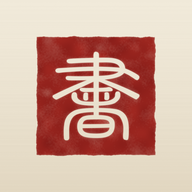
Four Treasures of the Study is a digital scholar's desk: brush, ink, paper, inkstone, and a seal you compose and carve yourself, in red or white.