A Thousand Li
The seven texture strokes (cun) of Chinese landscape painting
Hemp-fibre, axe-cut, raindrop, folded band, rolling cloud, unravelled rope and Mi dots: what each texture stroke looks like, which painters it belongs to, and how a rendering engine turns each one into numbers.
What a cun is
In a Chinese landscape the outline of a mountain is only the start. What makes it read as earth, granite or wet rock is the cun (皴): the texture strokes laid inside the outline. Each master developed a recognisable way of doing this, and the strokes became a shared vocabulary. Name a cun and a trained eye can usually name the school.
The A Thousand Li app paints with seven of them. Its engine treats a cun as a recipe: a brush shape plus a stroke curve, length, density, direction, curl, clustering and fold. Changing school means changing that set of numbers, not swapping in different code. That makes it a useful way to see what actually distinguishes them.
The seven at a glance
| Texture stroke | Associated with | What it looks like |
|---|---|---|
| Hemp-Fibre Texture 披麻皴 · pima cun | Dong Yuan & Juran, 10th c. | Long soft strokes laid down the slope like combed hemp — the southern school's earth mountains. |
| Axe-Cut Texture 斧劈皴 · fupi cun | Li Tang, Ma Yuan, Xia Gui | Short broad wedges struck with the side of the brush. Hard northern rock, one edge sharp, one flying white. |
| Raindrop Texture 雨点皴 · yudian cun | Fan Kuan, 11th c. | Dense short marks pelting the rock face. Builds the crushing weight of Travelers Among Mountains and Streams. |
| Folded-Band Texture 折带皴 · zhedai cun | Ni Zan, 14th c. | Dragged flat, then turned down at a right angle. The sparsest of all — Ni Zan left most of the paper empty. |
| Rolling-Cloud Texture 卷云皴 · juanyun cun | Guo Xi, 11th c. | Curling strokes that give rock sinew and flesh. From Early Spring. |
| Unravelled-Rope Texture 解索皴 · jiesuo cun | Wang Meng, 14th c. | Long twisting strands like a rope coming undone. Wang Meng packed his mountains until no air was left. |
| Mi Dots 米点皴 · midian cun | Mi Fu & Mi Youren, 11th–12th c. | Wet horizontal dots piled into mountains. No hard edge anywhere — rain and mist. |
A rough split runs through the list. The northern strokes (axe-cut, folded band) go with cliffs and terraces; the southern ones (hemp-fibre, Mi dots) go with rounded, rolling hills. The engine follows the same logic: picking axe-cut makes the mountains blockier (0.88 on its blockiness scale), Mi dots makes them soft (0.10), and hemp-fibre sits near the round end (0.35). It is one shape formula with two ends, not two separate mountain generators.
Each stroke, drawn
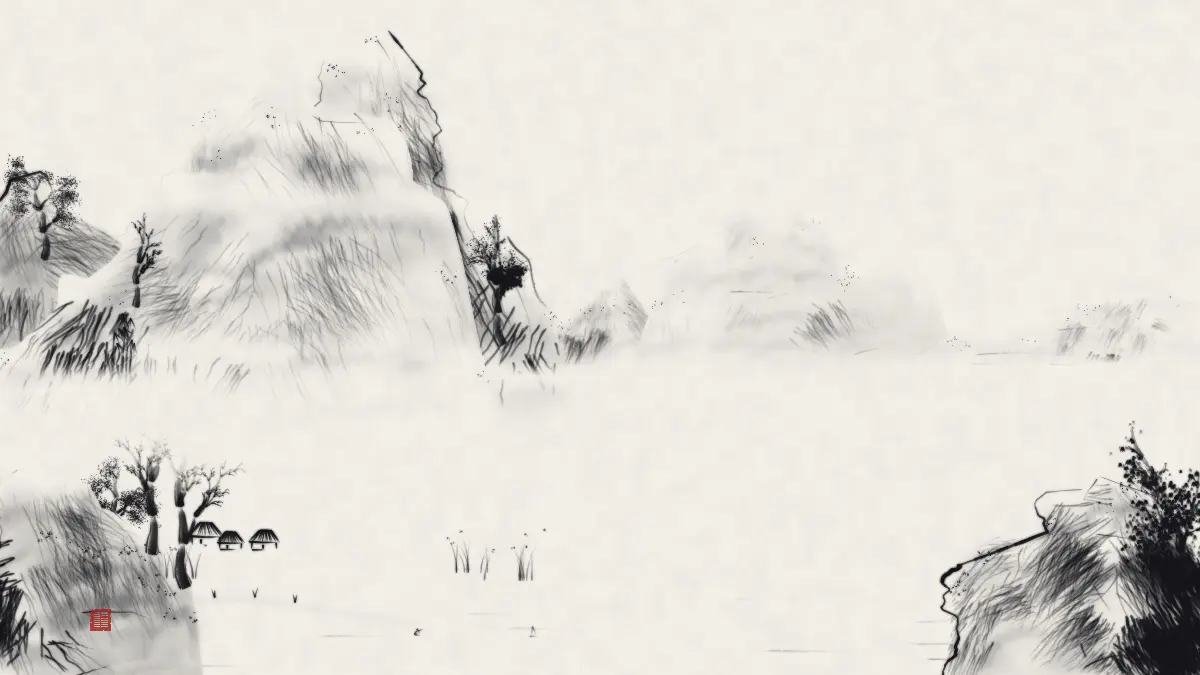
Hemp-Fibre Texture (披麻皴)
Long soft strokes laid down the slope like combed hemp — the southern school's earth mountains. Associated with Dong Yuan & Juran, 10th c..
In the engine: length 30–62% of the mountain's height · density 430 · follows the slope 0.95 · nearly no curl
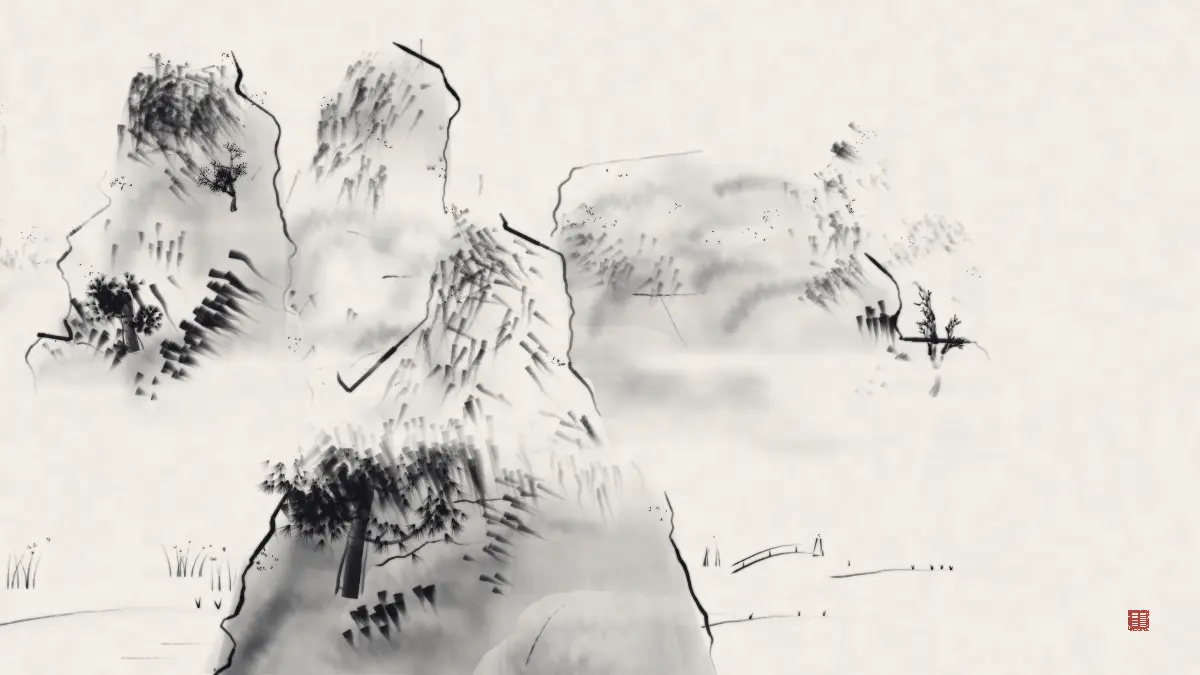
Axe-Cut Texture (斧劈皴)
Short broad wedges struck with the side of the brush. Hard northern rock, one edge sharp, one flying white. Associated with Li Tang, Ma Yuan, Xia Gui.
In the engine: short (14–34%) · side-of-brush bias 0.85 · 16 hairs, the widest brush · strokes bunch together (0.62)
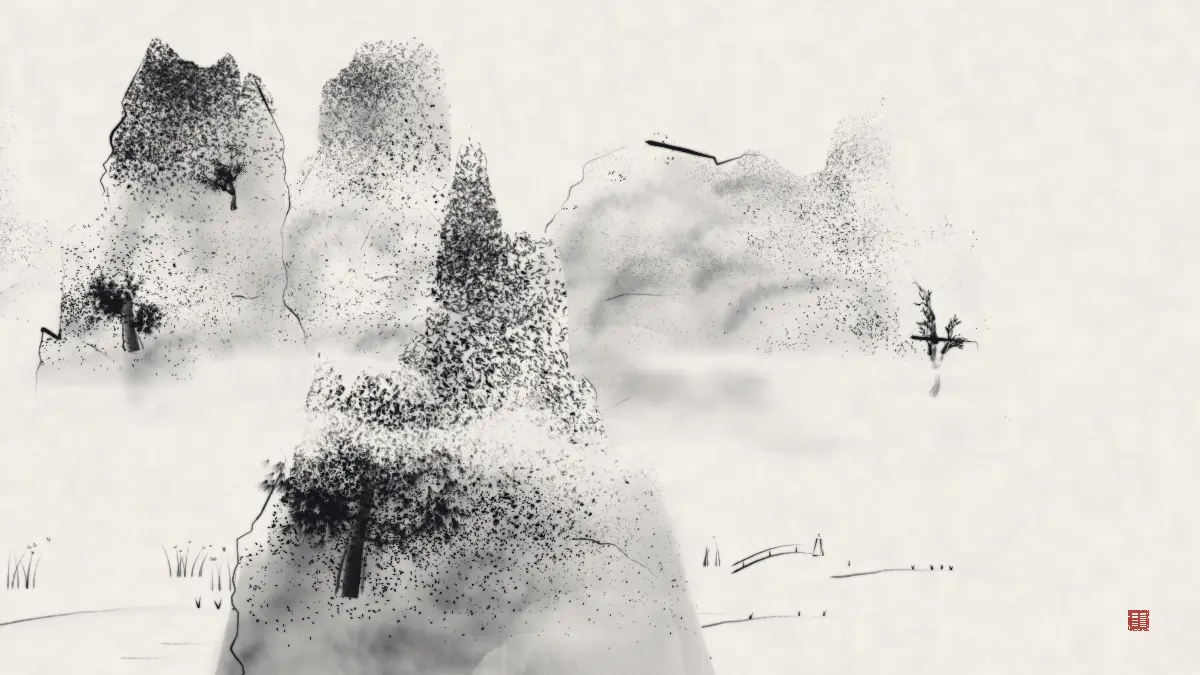
Raindrop Texture (雨点皴)
Dense short marks pelting the rock face. Builds the crushing weight of Travelers Among Mountains and Streams. Associated with Fan Kuan, 11th c..
In the engine: very short (0.7–2%) · density 2,400, the densest of the seven · press-and-lift dot
Folded-Band Texture (折带皴)
Dragged flat, then turned down at a right angle. The sparsest of all — Ni Zan left most of the paper empty. Associated with Ni Zan, 14th c..
In the engine: fold 0.85 · density 85, the sparsest · follows the slope only 0.25, so it runs along the contours
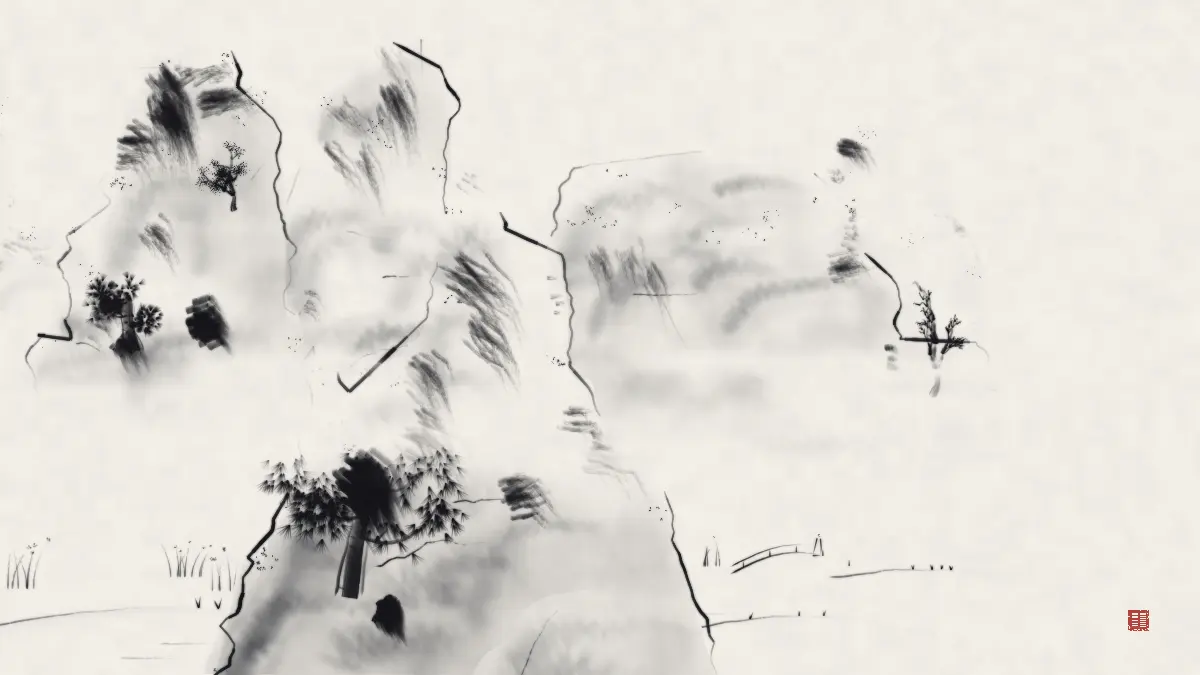
Rolling-Cloud Texture (卷云皴)
Curling strokes that give rock sinew and flesh. From Early Spring. Associated with Guo Xi, 11th c..
In the engine: wraps around each boulder 0.88 · curvature 0.40 · strokes bunch together (0.55)
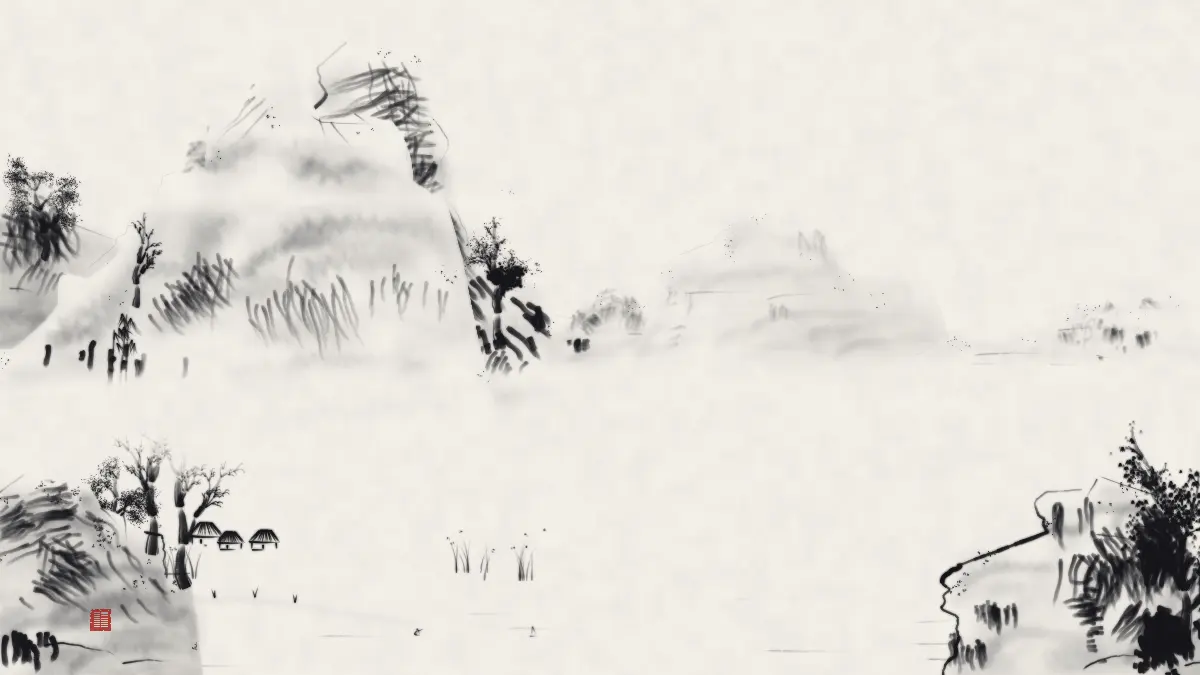
Unravelled-Rope Texture (解索皴)
Long twisting strands like a rope coming undone. Wang Meng packed his mountains until no air was left. Associated with Wang Meng, 14th c..
In the engine: hand tremor 0.85, the highest · swirl 0.85 · long (22–50%) · curvature 0.62
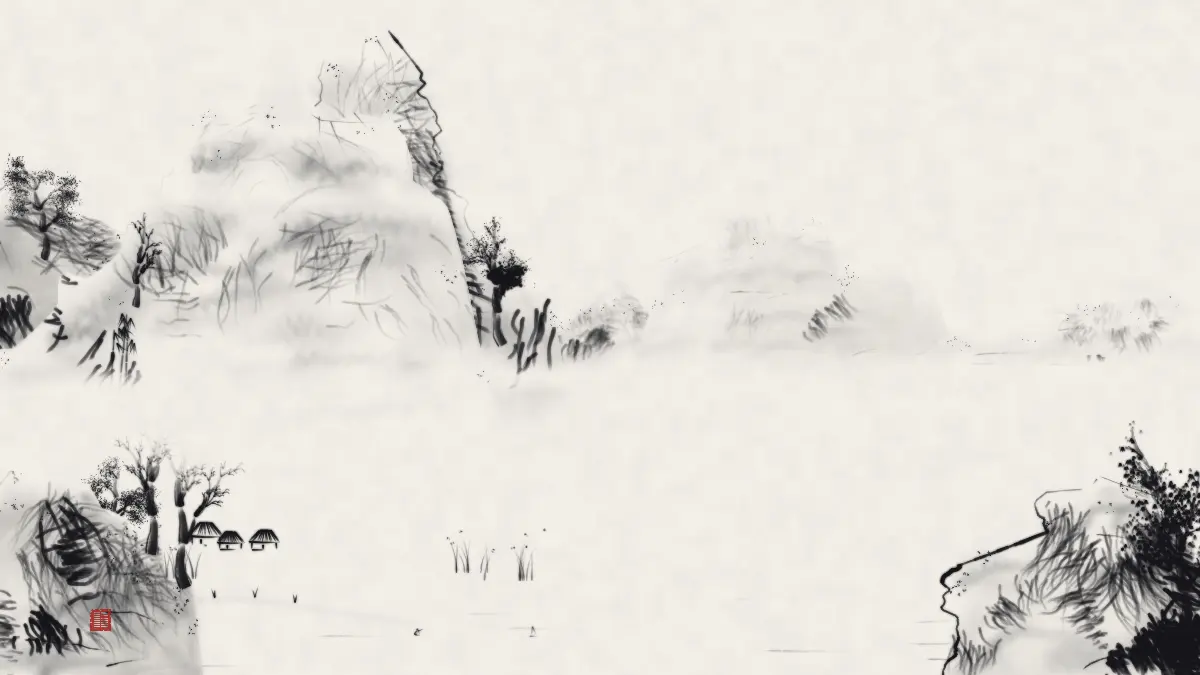
Mi Dots (米点皴)
Wet horizontal dots piled into mountains. No hard edge anywhere — rain and mist. Associated with Mi Fu & Mi Youren, 11th–12th c..
In the engine: dryness 0.06, the wettest · big soft dots · follows the slope only 0.15
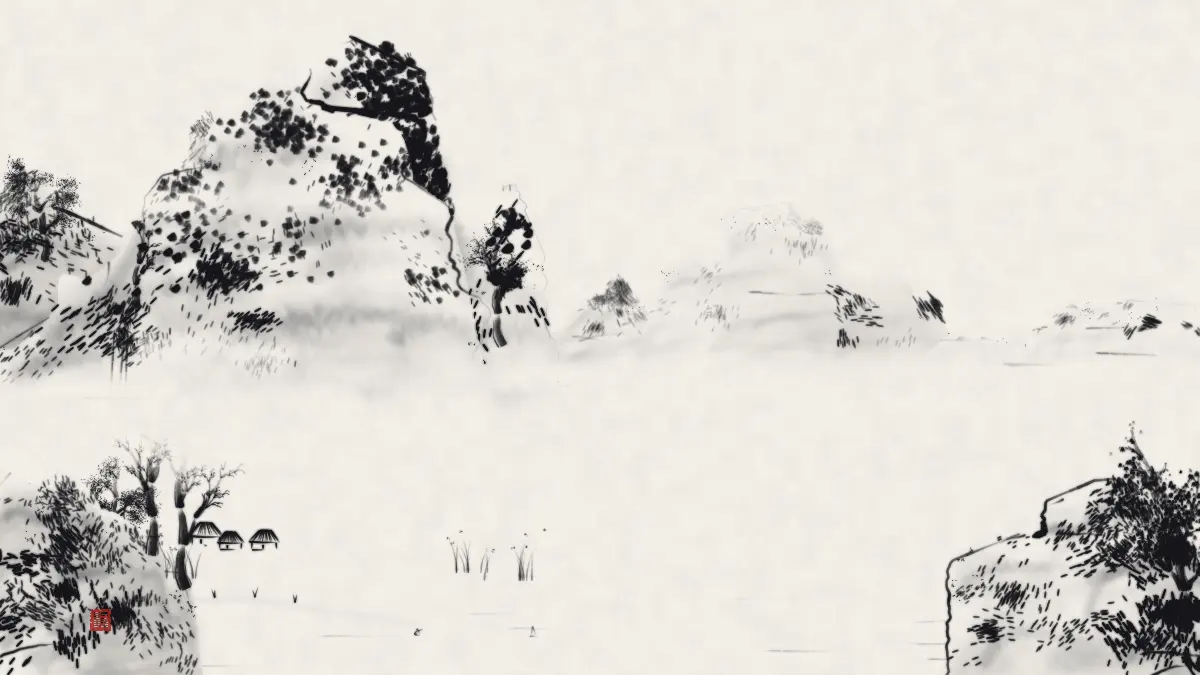
How the engine lays the strokes
- Strokes hang from edges. They start along the mountain’s outline, along a set of inner contour lines, and along the top edge of every rock, then fall downward. Texture is “draped” down from each ridge, which is where the name hemp-fibre comes from.
- They come in groups. A painter lays eight to twenty strokes in one breath, then moves on. The engine places groups (6–22 strokes each, 14–44 for dot strokes), not individual marks.
- Shadow decides where they go. The Mustard Seed Garden Manual (《芥子园画传》) sums it up: however many kinds of cun there are, they all come down to light and shade, facing and turning away (皴法虽多,要之不出乎阴阳向背). Groups on the shaded side are much more likely to be kept than those in the light.
- Direction is a blend. A follow-the-slope value of 1 runs strokes straight down the fall line; 0 runs them sideways along the contour. Hemp-fibre is 0.95, axe-cut 0.80, folded band 0.25, Mi dots 0.15.
- The fold. For folded band, the second half of each stroke is pushed straight down, which produces Ni Zan’s drag-then-drop.
- The hand shakes. Every brush has some tremor. The engine’s note on it reads: tremor can never be zero; at zero you get a printed typeface.
Questions
What does cun (皴) mean in Chinese painting?
The texture strokes drawn inside the outline of a rock or mountain to give it surface, volume and the feel of a particular kind of stone or earth.
Which cun did Fan Kuan use?
The raindrop texture (雨点皴): dense, short marks that build the heavy mass of Travelers Among Mountains and Streams.
What is the difference between hemp-fibre and axe-cut strokes?
Hemp-fibre strokes are long, soft lines draped down earthen hills (Dong Yuan, Juran). Axe-cut strokes are short, broad wedges struck with the side of the brush for hard rock (Li Tang, Ma Yuan, Xia Gui).
- Stroke names, painters and descriptions: the A Thousand Li app's own texture-stroke notes (English and Chinese), which follow the painters’ usual attributions.
- Engine parameters: the app’s rendering engine, Cun.swift (one parameter set per texture stroke) and Mountain.swift (how strokes are placed). Numbers are the shipped values.
- Quotations: 《芥子园画传》 (“皴法虽多,要之不出乎阴阳向背”); 郭熙 (“主峰最宜高耸”).
- Illustrations: rendered for this page with the app’s engine (seed 7, ink only, 1200 × 675). They are the engine’s own output, not reproductions of any painting.
Also in this series
A Thousand Li paints one Chinese landscape each morning, computed on your phone from the old painting manuals. Pick the school and the cun changes with it.