A Thousand Li
Guo Xi's three distances: high, deep and level
The 11th-century painter Guo Xi named three ways a landscape can hold depth. What he wrote, what each one means on the paper, and how a painting engine turns them into layout rules.
What Guo Xi wrote
In Lofty Message of Forests and Streams (《林泉高致》), Guo Xi describes three “distances” (三远). Each is defined by where the viewer stands and what the eye does:
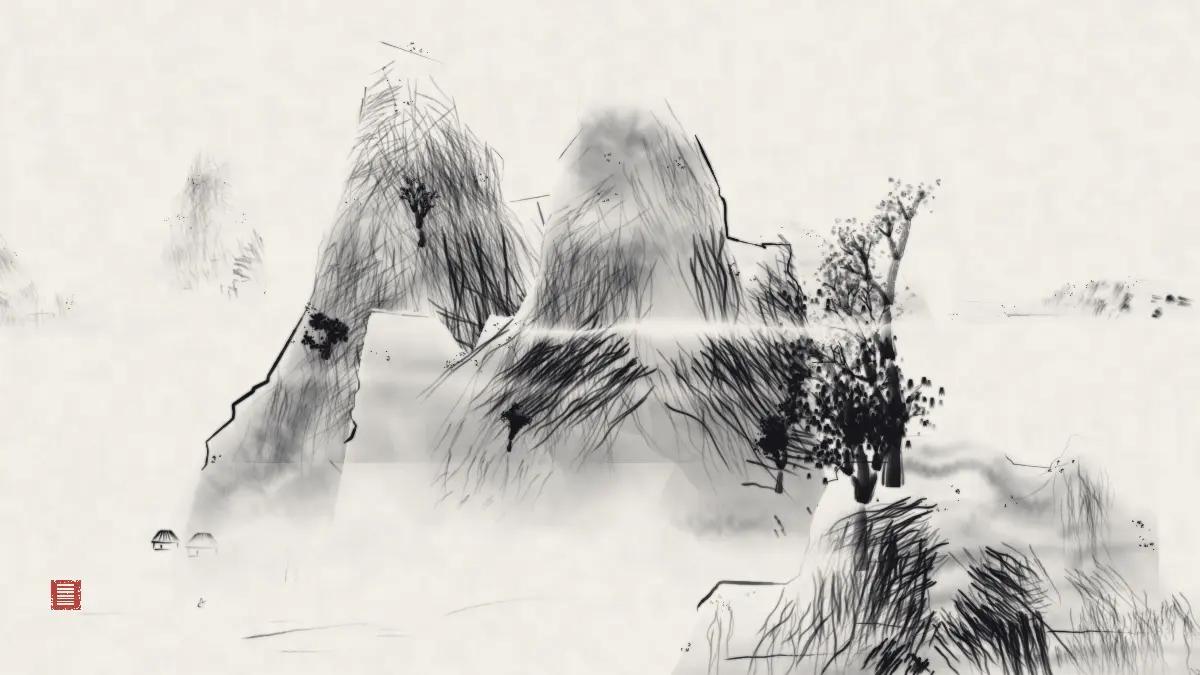
High distance (高远): from the foot of the mountain, looking up to the summit (自山下而仰山巅). Its colour is clear and bright; its force is abrupt (其色清明,其势突兀).
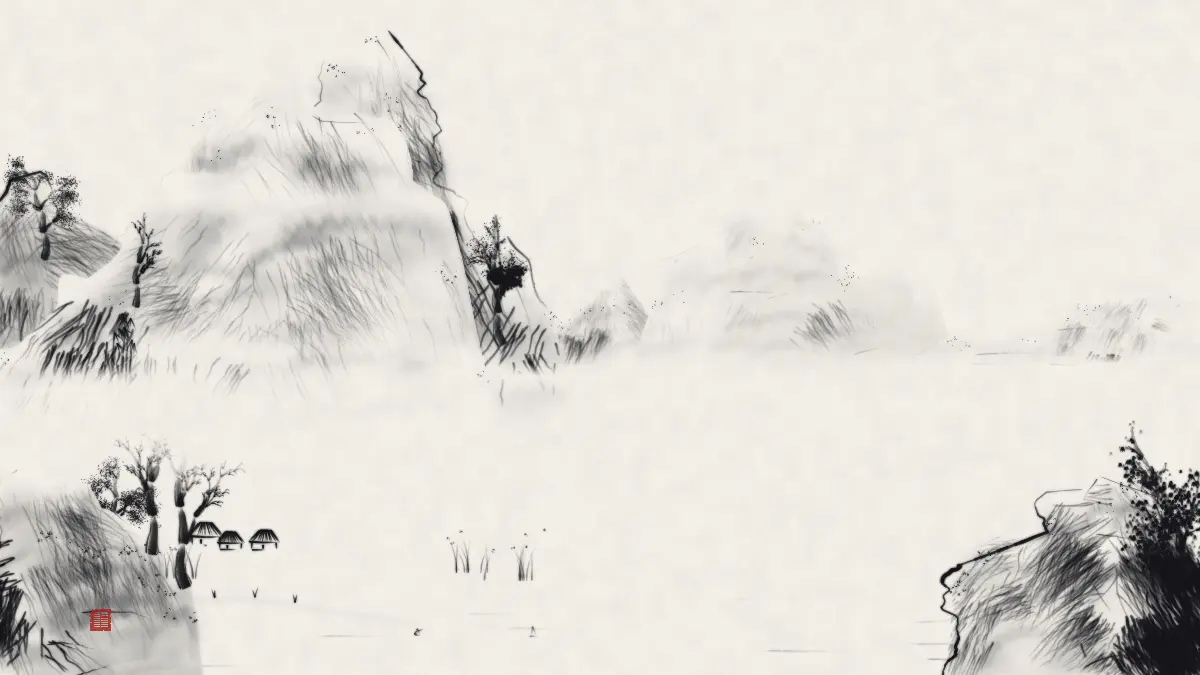
Deep distance (深远): from in front of the mountain, peering through to what lies behind (自山前而窥山后). Its colour is heavy and dark; its sense is of layer upon layer (其色重晦,其意重叠).
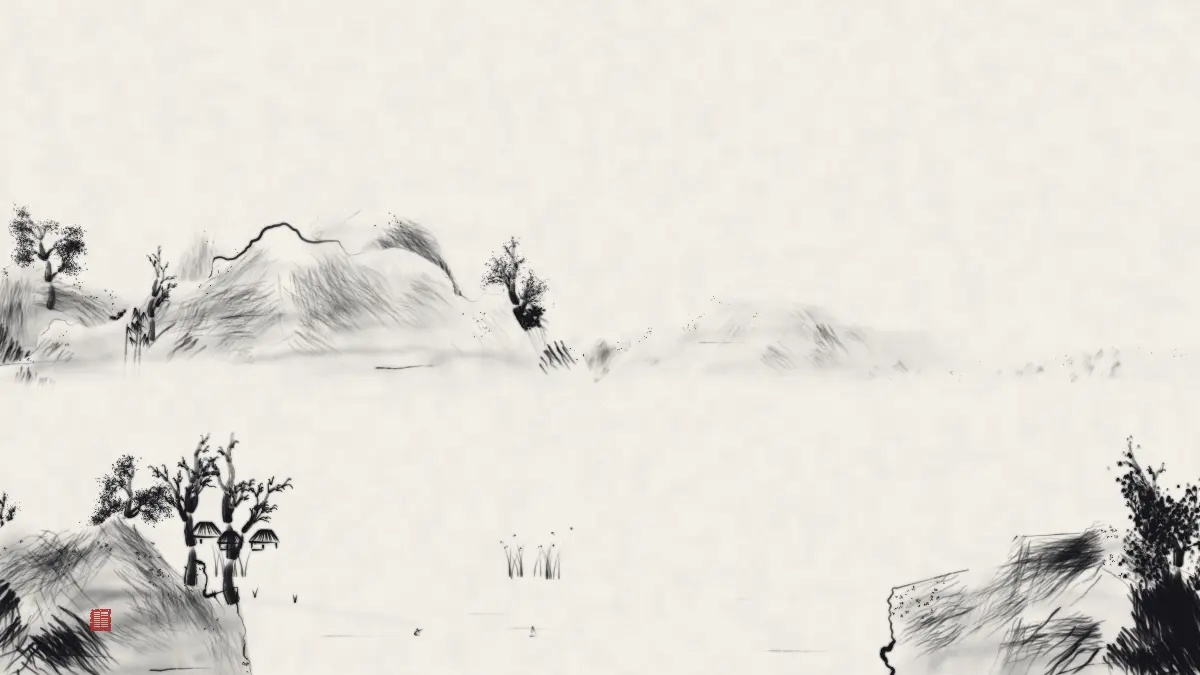
Level distance (平远): from a near hill, gazing across to far ones (自近山而望远山). Its colour mixes light and dark; its sense is of things blending and drifting away (其色有明有晦,其意冲融而缥缥缈缈).
(English renderings ours; the Chinese is Guo Xi’s.)
Not perspective
It is tempting to read these as three camera angles. They are not. A Chinese landscape has no single vanishing point, and none of the three needs one. They are three different ways of encoding depth: by height and closeness, by overlap and mist, or by spreading out and fading. The A Thousand Li engine, which builds every painting from these rules, puts it the same way: for each picture the choice of distance decides the baseline of every layer, how tall the mountains are, how fast ink fades, and how many mountains there are and how wide.
The three, rendered
Same seed, same hemp-fibre texture, ink only. The only thing that changes is the distance.
What each one changes
| High distance 高远 | Deep distance 深远 | Level distance 平远 | |
|---|---|---|---|
| Main mountains | one peak, 84% of the picture's height, its foot almost at the bottom edge | 2–3 mid peaks at 46%, behind 1–2 tall near hills | 2–3 mid hills at only 23%, spread wide |
| Far range | 2–3 small peaks | 4–6 overlapping ridges | 4–6 low ridges |
| Water | 3–10% of the picture: a slope, not a lake | 12–22% | 32–48%: the widest |
| Mist | 20–45%: clear | 55–88%: heavy | 35–62% |
| Ink strength | × 1.15 | × 1.0 | × 0.80: pale |
| Waterfall | likely (78%) | likely (78%) | rare (30%) |
High distance: the foot is right in front of you
The engine’s note on this is blunt: the key to “looking up” is not drawing the mountain tall, it is putting its foot right in front of you. So there is exactly one main peak, it fills most of the height, and its base sits almost at the bottom of the picture. Fan Kuan’s Travelers Among Mountains and Streams, where the main peak takes up about two-thirds of the painting, is the reference.
Deep distance: overlap, then mist
Here depth comes from things hiding things. The near hills must be tall enough that their tops reach the feet of the middle range, which is the crux of deep distance; then bands of mist cut the ranges apart and push them back. Guo Xi has a line for the mist too: if you want a mountain to look high, don’t show all of it; lock its waist in mist and haze and it becomes high (山欲高,尽出之则不高,烟霞锁其腰则高矣).
Level distance: low, wide, pale
Mountains low and spread sideways, ink pale, the most empty paper of the three, and a wide river. It is the Ni Zan mode, and it pairs naturally with his sparse folded-band texture. Waterfalls are rare: on a broad river plain there usually isn’t one.
Questions
What are the three distances in Chinese painting?
Guo Xi's high distance (looking up from the foot of a mountain), deep distance (looking past the front range to what lies behind) and level distance (looking from a near hill across to far ones).
Where do the three distances come from?
From Guo Xi's treatise Lofty Message of Forests and Streams (林泉高致), 11th century.
Are the three distances a kind of perspective?
Not in the Western sense. There is no vanishing point; each is a way of showing depth through height, overlap and mist, or spreading and fading.
- Guo Xi’s definitions and the “lock its waist in mist” line: 《林泉高致》, as quoted in the A Thousand Li engine’s design notes (ART-THEORY.md, Mountain.swift).
- English names (High / Deep / Level Distance) and one-line glosses: the app’s English interface text.
- Layout numbers (peak heights, counts, water, mist, ink, waterfall odds): the engine’s shipped values in Composition.swift and Mountain.swift.
- Illustrations: rendered for this page with the app’s engine (seed 7, hemp-fibre, ink only). The command-line renderer used here varies layout by distance but draws mist and water from one shared range, so those differ less than in the app.
Also in this series
A Thousand Li paints one landscape each morning from these rules. The distance rotates day by day, so a week holds all three.